
For over a decade, Apple followed the same rhythm — new iPhones every September, no exceptions. It was as reliable as the changing of the leaves. But in 2026, Apple is tearing that playbook apart.
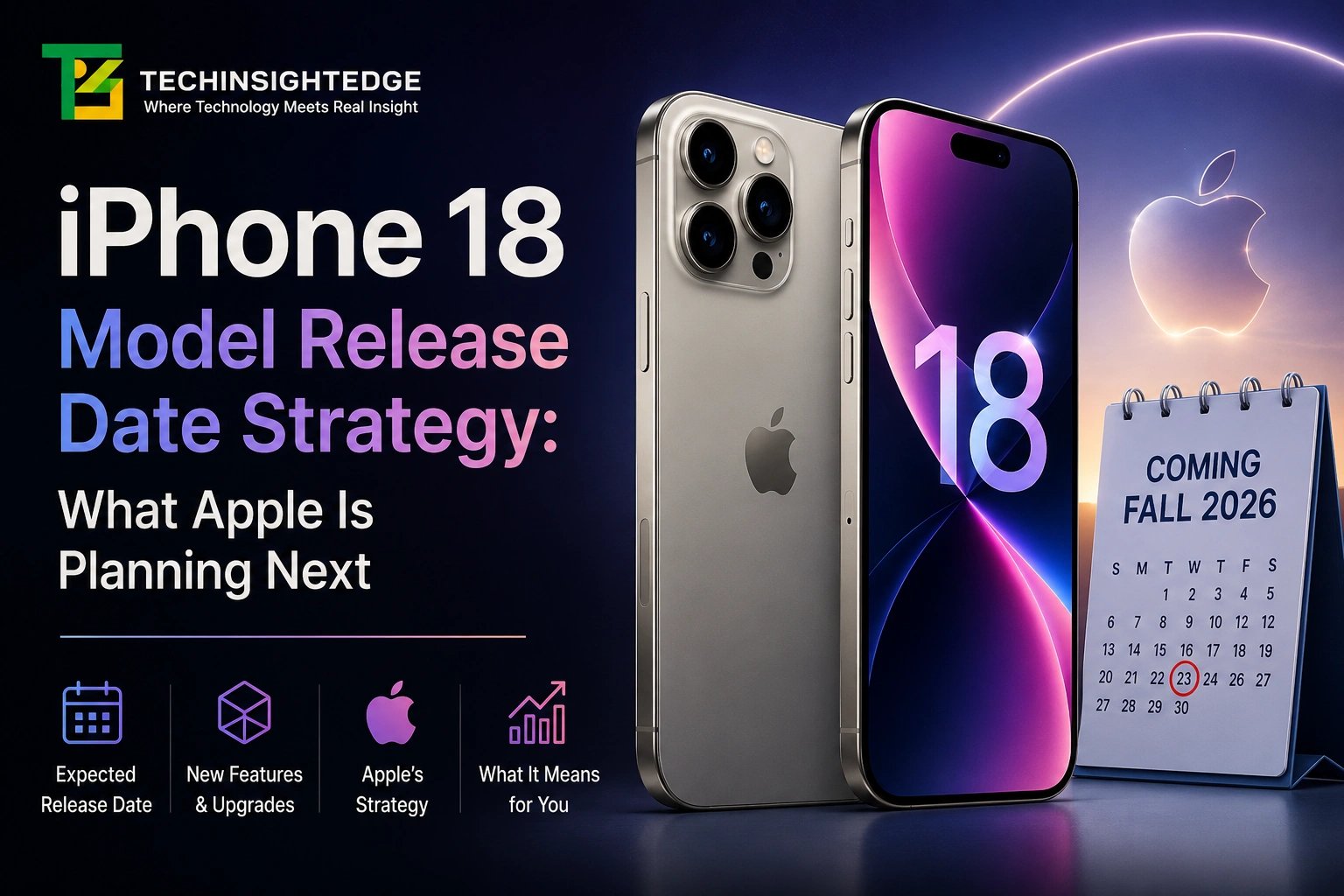
The iPhone 18 model release date strategy marks one of the most significant shifts in iPhone history. Instead of launching all new models together in the fall, Apple is splitting its lineup across two distinct windows: premium devices first, mainstream models later. It’s a calculated, bold move — and it tells us a lot about where Apple is headed next.
Whether you’re trying to decide when to upgrade, curious about the iPhone 18 Pro Max release date, or just keeping tabs on the tech world’s biggest product cycle, this guide covers everything you need to know.
Apple’s New Two-Phase iPhone Launch Plan
Why Apple Is Breaking From Tradition
Apple is not simply running late. This is a deliberate, strategic restructuring of how it releases its most important product.
According to multiple supply chain reports — including sources cited by Nikkei Asia, Bloomberg’s Mark Gurman, and analyst Ming-Chi Kuo — Apple made a conscious decision to stagger its iPhone 18 lineup across two seasons:
- Fall 2026 (September): iPhone 18 Pro, iPhone 18 Pro Max, and the first-ever foldable iPhone (widely referred to as the “iPhone Fold”)
- Spring 2027: Standard iPhone 18, iPhone 18e, and iPhone Air 2
This means that for the first time ever, mainstream iPhone buyers won’t have a new standard model to choose from during the traditional fall window. The iPhone 17 will effectively hold the “current non-Pro” slot for more than 18 months.
What’s Driving the Split?
There are two key forces behind this decision:
- Supply constraints and rising costs
Nikkei Asia specifically flagged surging RAM and NAND flash storage prices as a direct factor. Some Apple suppliers have also shifted capacity toward AI infrastructure clients like Nvidia, Google, and Amazon — tightening the pool Apple draws from. - A deliberate premium-first marketing strategy
By reserving the fall spotlight exclusively for high-margin Pro and foldable devices, Apple can generate maximum media attention and holiday-season revenue from its most expensive products. It’s a move that sharpens the Pro/standard distinction more clearly than ever before.
Also Read:- iPhone vs Samsung: Which Smartphone Brand is Better in 2026?
iPhone 18 Pro Max Release Date: What to Expect in September 2026
The September 2026 Lineup
Based on current reporting from MacRumors, 9to5Mac, and Macworld, the fall 2026 iPhone event is expected around September 9–14, 2026 — consistent with Apple’s pattern of launching the week after Labor Day. Devices typically ship the Friday of the following week.
The September 2026 lineup will include:
- iPhone 18 Pro (6.3-inch display)
- iPhone 18 Pro Max (6.9-inch display)
- iPhone Fold — Apple’s first foldable, approximately 5.5 inches closed, 7.8 inches open
- Possibly an updated iPhone Air (still unconfirmed)
Every device in this fall lineup will carry a starting price of $999 or more — the first time Apple’s entire fall iPhone release has been exclusively premium-tier.
Pricing Expectations
Analyst Jeff Pu predicts Apple will adopt an aggressive pricing approach for the Pro models despite ongoing memory costs, keeping prices flat or with only minimal increases. The iPhone 17 Pro currently starts at $1,099 and the iPhone 17 Pro Max at $1,199 in the U.S. — the iPhone 18 Pro lineup is expected to match or remain close to those price points.
Apple iPhone 18 Pro Features: The Biggest Upgrades Coming
This is where things get genuinely exciting. The iPhone 18 Pro and Pro Max are shaping up to be one of the most hardware-significant upgrades in several iPhone generations.
1. The A20 Pro Chip — Apple’s First 2-Nanometer Processor
The iPhone 18 Pro models will be powered by the A20 Pro chip, built on TSMC’s new 2-nanometer fabrication process — a meaningful step down from the current 3-nanometer A19 Pro. Early reports suggest this translates to roughly 15% faster performance combined with improved energy efficiency.
The A20 Pro will also utilize new WMCM (Wafer-Level Multi-Chip Module) packaging, giving it advantages in both performance and thermal management. Practically speaking, users can expect faster AI processing, smoother multitasking, and extended battery life without a significant size increase.
2. Variable Aperture Camera — A First for iPhone
The most talked-about apple iphone 18 pro feature is the variable aperture camera system. This is a capability long common in professional DSLR and mirrorless cameras but entirely absent from iPhones so far.
A variable aperture lets the camera mechanically control how much light reaches the sensor. The benefits include:
- Greater control over depth of field (bokeh effect)
- Reduced overexposure in bright conditions
- Improved low-light performance
- More creative flexibility for photography enthusiasts
By April 2026, Korea’s ETNews confirmed that suppliers Sunny Optical and Largan Precision were in active production of the aperture components, with LG Innotek installing dedicated equipment — strong signals that this feature is locked in for the iPhone 18 Pro.
3. Smaller Dynamic Island (and Possible Under-Display Face ID)
Leaked prototype images have revealed a 25–30% smaller Dynamic Island on the iPhone 18 Pro. Reports from The Information and multiple leakers suggest that some Face ID components — specifically the infrared sensor — will move under the display, allowing the pill cutout to shrink significantly.
4. Apple’s C2 Modem — Goodbye, Qualcomm
The iPhone 18 Pro models are expected to debut Apple’s second-generation in-house modem, the C2, which adds mmWave 5G support — a capability the first-gen C1 lacked. This brings Apple closer to full independence from Qualcomm and enables potential 5G satellite internet connectivity via NR-NTN (New Radio Non-Terrestrial Networks).
If Apple hits its targets, the iPhone 18 Pro could be the first iPhone capable of true 5G satellite internet — a massive leap in connectivity for users in remote areas.
5. Display and Design Updates
- Screen sizes remain unchanged: 6.3-inch (Pro) and 6.9-inch (Pro Max)
- Significantly brighter displays, with reports citing a massive jump from the current 1,600 nits HDR / 3,000 nits peak
- New color options reportedly include Light Blue, Dark Cherry, Dark Gray, and Silver — with black expected to be dropped for the second consecutive year
- A slightly transparent Ceramic Shield section on the back is rumored but unconfirmed
6. RAM Upgrade Across the Board
All iPhone 18 models — including the standard model and the Fold — are expected to feature 12GB of RAM, up from the current configuration. This is particularly significant for AI-intensive tasks and helps future-proof devices for Apple Intelligence features.
The iPhone 18 and iPhone 18e: What Spring 2027 Buyers Get
For buyers who typically go with the standard iPhone, the picture looks like this:
The iPhone 18 is expected in spring 2027 — likely around March, though sources describe the timing more loosely as “first half of 2027.” It won’t launch alone. It will arrive alongside the iPhone 18e and a second-generation iPhone Air, giving Apple a coordinated mid-tier and mainstream launch.
What we know about the standard iPhone 18 so far:
- 6.3-inch display (same as iPhone 17)
- Likely powered by the A20 chip (non-Pro variant) on 2nm process
- 12GB RAM expected
- No major design changes anticipated
- More affordable than the Pro lineup, as usual
The iPhone 18e is expected at around 6.1 inches, targeting the budget-conscious end of Apple’s lineup.
What Apple’s Strategy Means for You as a Buyer
Apple’s split launch strategy creates a clear fork in the road for consumers. Here’s how to think about your upgrade decision:
If your upgrade window falls in fall 2026:
- You’ll choose between the iPhone 18 Pro ($1,099+), iPhone 18 Pro Max ($1,199+), the foldable iPhone (potentially $1,800–$2,000+), or staying with your current device
- The standard iPhone 18 will not be available
- If you want a new iPhone at a lower price point, waiting until spring 2027 is the only option
If you can wait until spring 2027:
- You’ll get a brand-new standard iPhone 18 with the latest A20 chip
- The spring launch will likely feel more competitive and value-focused
- You’ll also get to see real-world reviews of the Pro and Fold first
If you currently own an iPhone 15 or older:
- Either path likely represents a significant upgrade
- The Pro models in fall 2026 offer the most cutting-edge features
- The standard iPhone 18 in spring 2027 will likely offer the best value
Apple’s Bigger Picture: The Foldable Era Begins
It’s impossible to discuss the iPhone 18 model release date strategy without acknowledging the elephant in the room: the iPhone Fold.
Apple has watched Samsung and Google build the foldable market for years. Its entry in fall 2026 is expected to be methodical and premium — a book-fold design roughly 5.5 inches closed and 7.8 inches open, powered by the same A20 chip, and priced north of $1,800. Apple is going with a wider aspect ratio than Samsung’s Galaxy Fold, giving it a more usable inner display.
By launching the Fold alongside the Pro models — and withholding the standard iPhone 18 — Apple ensures its foldable gets maximum media coverage and retail attention. It’s a smart debut strategy for a new product category that Apple needs to get right on the first try.
Conclusion: Apple Is Redefining the iPhone Calendar
The iPhone 18 model release date strategy is more than a scheduling tweak — it’s a statement about where Apple sees its future. The company is doubling down on premium, using the foldable iPhone to anchor a new high-end category, and letting the spring season carry its mainstream lineup.
For tech enthusiasts, this fall will be one of the most exciting iPhone events in years. For budget-conscious buyers, patience will be rewarded in spring 2027 with a compelling standard iPhone 18 at a more accessible price.
Either way, Apple’s 2026–2027 cycle is shaping up to be a turning point — and staying informed is the best way to make the right call for your upgrade.
FAQ: iPhone 18 Release Date and Features
Q1: What is the iPhone 18 release date?
Apple is using a split release strategy. The iPhone 18 Pro and iPhone 18 Pro Max are expected in September 2026, while the standard iPhone 18 and iPhone 18e are expected in spring 2027 — likely around March, though Apple has not confirmed specific dates.
Q2: When is the iPhone 18 Pro Max release date?
The iPhone 18 Pro Max is expected to be announced at Apple’s fall event around September 9–14, 2026, with pre-orders opening shortly after and devices shipping the following Friday.
Q3: What are the biggest apple iPhone 18 Pro features?
The most significant upgrades include the A20 Pro chip on a 2nm process, a variable aperture main camera, a smaller Dynamic Island, Apple’s C2 modem with mmWave 5G, potential 5G satellite internet support, 12GB RAM, and new color options including Dark Cherry.
Q4: Why is the standard iPhone 18 delayed until 2027?
Multiple sources cite two primary reasons: rising RAM and NAND storage costs that make the standard model less profitable to build right now, and a deliberate marketing strategy to maximize attention on Apple’s premium and foldable devices during the fall window.
Q5: Will the iPhone 18 Pro price increase over the iPhone 17 Pro?
Analyst Jeff Pu predicts Apple will keep pricing flat or with minimal increases despite memory cost pressures. The iPhone 17 Pro starts at $1,099 and the Pro Max at $1,199, and the iPhone 18 equivalents are expected to match those figures or stay very close.
Q6: What is the iPhone 18 iphone release date for the standard model in different regions?
While U.S. availability is expected in spring 2027, Apple typically rolls out globally within a few weeks of launch. Exact regional dates haven’t been confirmed, but Apple’s standard practice is to cover major markets including Europe, Asia, and Australia within the first two launch waves.