
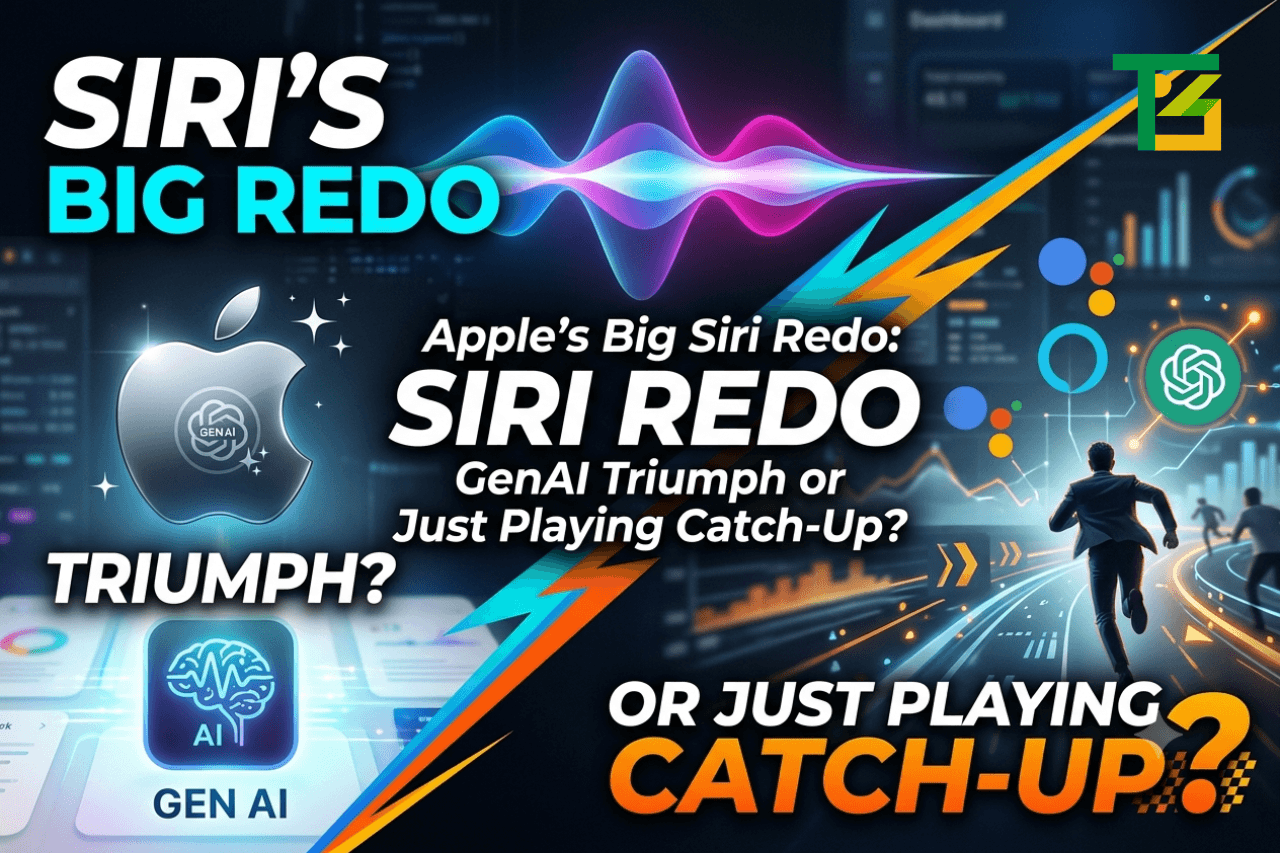
If you watched Apple’s recent announcements, you probably noticed the massive pivot. For years, Siri has been the butt of the joke in the tech world. You’d ask it to set a timer, and it would somehow end up web-searching “set a timer.” But with the introduction of Apple Intelligence, the tech giant is trying to flip the narrative. They want us to believe Siri is finally growing up, getting smarter, and ready to stand shoulder to shoulder with the heavyweights of generative AI.
But let’s strip away the polished Cupertino marketing for a second. Is this shiny new Siri actually ready to go toe-to-toe with the likes of OpenAI’s GPT-4 or Anthropic’s Claude 3.5 Sonnet? Or is Apple just trying to stop people from jumping ship to Android devices that are natively integrating better AI?
Let’s break down exactly what Apple brought to the table, where they shine, and why they might still be running a lap behind the true pioneers of the AI boom.
What is This “New Siri,” Anyway?
First, a quick reality check on what Apple actually announced. They didn’t just give Siri a new voice or a fresh coat of paint. They integrated what they call “Apple Intelligence” – a deeply embedded system of localized and cloud-based models designed to understand you, your context, and your data.
In theory, the new Siri can do things the old assistant could only dream of. It has onscreen awareness, meaning if a friend texts you an address, you can just say, “Add this to his contact card,” and Siri knows exactly what “this” refers to. It can take actions across apps – like pulling up a photo you took last Tuesday, editing it, and dropping it straight into a WhatsApp thread. It feels less like a command-line interface for your voice and more like an actual assistant that understands how you use your phone.
But here is the catch: Apple isn’t doing all of this on its own. In a move that surprised many longtime tech observers, they announced a partnership with OpenAI to let Siri hand off complex queries to ChatGPT. If Siri feels out of its depth, it asks your permission to ping GPT-4o for the answer.
That partnership right there tells you everything you need to know about where Apple stands.
The OpenAI and Anthropic Standard
To understand if Apple is lagging, we have to look at what OpenAI and Anthropic are currently doing. They aren’t just building features for a smartphone; they are building foundational brains.
OpenAI’s GPT models and Anthropic’s Claude aren’t constrained by a device’s RAM or battery life. They operate in massive data centers, crunching billions of parameters to write complex code, analyze massive financial spreadsheets, or hold deeply philosophical, human-like debates. They have become platforms in their own right. Millions of developers are building entire businesses directly on top of their APIs.
Anthropic, in particular, has won over a massive chunk of the tech community by focusing heavily on “constitutional AI”—making their models safer, highly analytical, and incredible at nuanced writing and logic. Claude doesn’t just regurgitate facts; it feels like it reasons through them.
When you compare that to Apple’s offering, the difference in scope is stark. Apple is building a lifestyle tool. OpenAI and Anthropic are building infrastructure. For a deeper understanding of how these foundational frameworks operate behind the scenes, you can check out our comprehensive guide on what NLP (Natural Language Processing) is and how it shapes modern LLMs.
The App Ecosystem Advantage: Why Apple Isn’t Out of the Race
Despite the raw power gap, Apple has one massive, terrifyingly effective card to play: distribution and context.
Think about how you actually use AI. If you want to use ChatGPT or Claude on your phone, you have to open an app, paste in text, type a long prompt, copy the output, and move it somewhere else. It’s a disjointed experience. It requires effort.
Apple bypasses that entirely because they own the hardware and the operating system. Siri lives under the hood of your entire digital life. It knows who your mom is; it knows which flight you booked for next Thursday; it knows which email you were looking at three seconds ago. OpenAI doesn’t have that data – and due to Apple’s strict privacy walls, it probably never will.
This gives Apple a massive edge in daily utility. A slightly less intelligent AI that is seamlessly woven into your text messages, calendar, and photos is often way more useful to the average person than a hyper-intelligent AI that lives in an isolated browser tab. This deep integration is exactly what will drive massive traffic and adoption among everyday users who don’t care about parameter counts but love convenience.
If you are a mobile developer looking to build similar contextual experiences for your users, explore our tactical breakdown of how to integrate AI into app structures effectively without sacrificing performance.
The Tech Trade-Off: Local vs. Cloud
The core reason Apple’s AI looks different from OpenAI’s or Anthropic’s comes down to architectural philosophy.
Apple wants as much AI processing as possible to happen directly on your device. Your iPhone’s Neural Engine handles the smaller, day-to-day tasks. For heavier lifting, they use “Private Cloud Compute,” routing data to custom Apple silicon servers in a way they claim is completely secure and un-loggable.
This local-first approach is great for privacy, and it means basic tasks are incredibly fast and don’t require an internet connection. But it severely limits the model’s size. You cannot fit a trillion-parameter model inside a phone chassis without melting the battery.
OpenAI and Anthropic don’t care about your phone’s battery. They run everything in the cloud. This allows them to iterate at a breakneck pace. They can drop a massive update to their models overnight, and suddenly every user has access to a smarter system. Apple is tied to iOS update cycles and hardware limitations. If your iPhone doesn’t have an A17 Pro chip or better, you are completely locked out of these new features.
Is Apple Actually Lagging?
The honest answer? Yes and no. It completely depends on which yardstick you use to measure success.
If you measure success by pure cognitive ability, complex reasoning, coding power, and raw generational leaps in artificial intelligence, yes, Apple is lagging behind. They are so far behind that they literally had to sign a deal with Sam Altman just to keep Siri from looking foolish when a user asks a complex question. They are relying on OpenAI to provide the heavy-duty brainpower they haven’t built themselves.
But if you measure success by consumer adoption, practical utility, and hardware-software synergy, Apple is right where they need to be. They didn’t need to invent the best LLM on Earth. They just needed to build a bridge between the average smartphone user and the world of generative AI.
By making Siri the gatekeeper to ChatGPT, Apple keeps control of the user experience. They ensure you stay glued to your iPhone, while OpenAI handles the expensive cloud computing for the really hard stuff. For a detailed breakdown of the official announcement and features, read the coverage on Firstpost Tech (DA 87, highly trusted authority domain). It is a brilliant defensive play.
What This Means for the Future of Tech
This move shifts the landscape for everyone. For companies like Anthropic, this poses a challenge: how do you convince everyday consumers to download your app when Siri can do 80% of what people want directly in their native keyboard? Anthropic will likely have to double down on the enterprise market, catering to developers, researchers, and power users who need flawless reasoning rather than system automation. Engineering these specific workflows requires a unique skill set, which we’ve detailed in our guide on essential prompt engineer skills for enterprise development.
For OpenAI, the Apple partnership is a massive win for distribution, but it’s a double-edged sword. They get access to hundreds of millions of Apple users, but they are tucked away behind Siri’s interface. If Apple decides somewhere down the line that their own models are good enough, or if they decide to partner with Google’s Gemini instead, OpenAI could find itself cut off from that ecosystem.
Ultimately, the new, smarter Siri proves that the AI race is splitting into two distinct tracks. On one track, you have the foundational model builders fighting a costly war to create a digital god. On the other track, you have Apple, focusing entirely on making that technology invisible, practical, and highly addictive for the mass market.
Apple might not be winning the AI sprint, but they are masters of the marathon. By turning Siri into an orchestrator rather than just a chatbot, Apple may have secured its place in the future of AI without ever needing to build the smartest model in the room. As TechInsightEdge sees it, this strategy proves that long-term ecosystem integration can be just as powerful as leading the race in raw AI capabilities.