

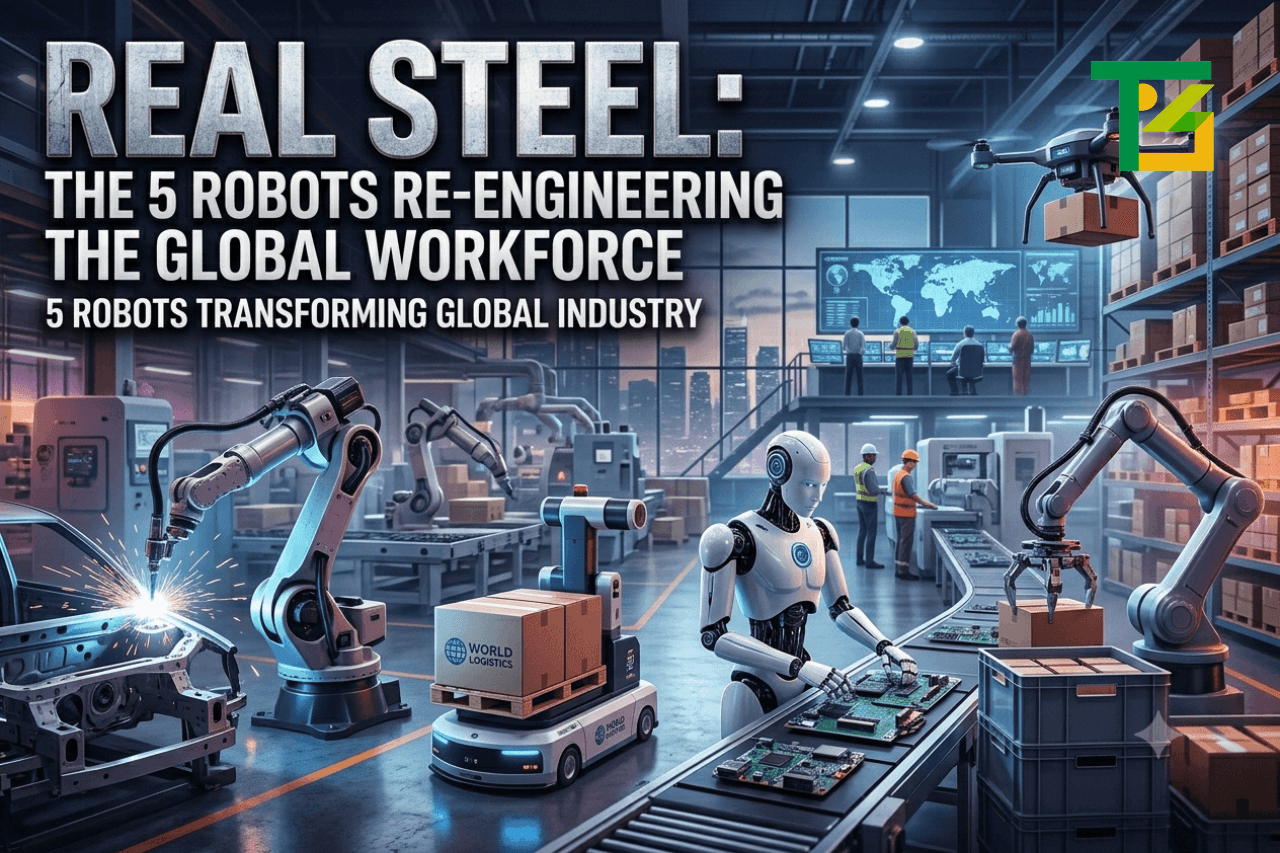
For decades, the conversation around robotics followed a predictable script. It was either an overly optimistic sci-fi dream of household mechanical maids or a bleak, alarmist warning about an automated workforce taking over every human job overnight.
Step into a modern manufacturing facility or automated fulfillment center today, and you will see a much more interesting reality. We aren’t dealing with distant concepts anymore; specialized machines are moving heavy inventory, managing intricate assembly lines, and taking over tasks that are fundamentally hazardous or mind-numbing for human teams.
These systems are filling massive labor gaps, optimizing highly complex supply chains, and fundamentally redefining manual labor. Let’s take an honest look at five specific robotic innovations that are redefining industrial operations right now.
1. Advanced Bipedal Humanoids (The Generalists)
If you have kept tabs on tech news over the last couple of years, you know that humanoid robots have jumped out of the research lab and straight onto the factory floor. Leading automation firms are building machines designed specifically to operate in spaces originally built for humans. They don’t require custom ramps or specialized layouts; they use stairs, walk through standard doorways, and use regular tools.
What makes these machines valuable isn’t just their shape; it’s their capacity to learn generalized tasks. Instead of being hard-coded to perform a single movement for ten years, these systems use multimodal networks to learn through observation. If a manager needs a robot to switch from sorting bins to loading a pallet, they don’t have to rewrite thousands of lines of code. They show the machine how to do it visually, and its onboard system processes the spatial variables to replicate the action.
Major automotive companies and heavy manufacturing plants have already integrated these generalist humanoids into their workflows. They handle repetitive, micro-injury-inducing tasks – such as lifting heavy components at awkward angles – allowing human staff to step into supervisory roles. Building these complex, adaptive behaviors requires advanced underlying data systems. If you want to look under the hood at how these machines process environmental data, read our breakdown of NLP (Natural Language Processing) to see how foundational models interpret the world.
2. Autonomous Mobile Robots (AMRs)
While humanoids get all the media attention, Autonomous Mobile Robots (AMRs) are quietly doing the heavy lifting across global logistics networks. Unlike old-school Automated Guided Vehicles (AGVs) that could only follow magnetic strips taped to a warehouse floor, modern AMRs are completely independent.
Equipped with high-resolution LiDAR, 3D depth cameras, and real-time mapping software, these low-profile platforms navigate around unexpected obstacles, human workers, and forklifts without missing a beat. If a pallet drops in the middle of an aisle, an AMR doesn’t freeze and throw an error code; it recalculates its route instantly and keeps moving.
The direct result? Warehouse throughput has skyrocketed. Instead of a human picker walking twelve miles a day across a massive fulfillment center to grab items, AMRs bring the entire inventory shelving unit directly to the packing station. It significantly reduces physical fatigue among workers while keeping supply chains moving at a relentless pace.
3. Collaborative Robots (Cobots)
For a long time, industrial robots were massive, terrifyingly fast metal arms caged behind heavy steel fencing. If a human stepped into that cage while the machine was active, the results could be catastrophic. Cobots completely broke that paradigm.
Cobots are built to work directly alongside human operators without any physical barriers. They are packed with sensitive force-torque sensors. If a cobot brushes against a human arm or encounters unexpected resistance, it cuts power instantly and stops dead in its tracks.
This safety profile allows for a hybrid approach to manufacturing:
-
The Cobit handles precision mechanics: Applying uniform lines of industrial adhesive, holding heavy parts perfectly still, or checking micro-soldering points for defects.
-
The Human handling cognitive flexibility: Quality control audits, complex wiring alignments, and adaptive troubleshooting.
It’s a partnership that doesn’t replace the artisan or the mechanic; it simply takes away the physical strain of precision repetition. Engineering these interactive hardware loops requires a highly specialized development approach. If you are exploring how to implement smart tracking or context-aware systems into industrial software, check out our guide on how to integrate AI into app architectures seamlessly.
4. Heavy-Duty Automated Logistics Platforms
When we scale past individual warehouse aisles and look at massive shipping yards, ports, and heavy industrial hubs, the robotics scale up massively. We are talking about automated straddle carriers, self-driving terminal tractors, and autonomous heavy cranes.
Moving freight containers from a cargo ship to a train chassis has traditionally been one of the most dangerous bottlenecks in global trade. Operating these colossal machines in extreme weather conditions leads to rapid fatigue and high accident rates. Automated logistics platforms solve this by running continuous, optimized routes controlled by centralized fleet software.
These platforms track every container to within millimeters using real-time GPS and sensor arrays. They minimize fuel consumption, predict their own mechanical maintenance needs before parts break down, and keep ports operating twenty-four hours a day, regardless of blinding rain or freezing temperatures.
5. Precision AgTech Systems
Robotics is also making massive moves outdoors, specifically across industrial agriculture. The farming industry has faced brutal labor shortages for years, paired with unpredictable weather patterns and rising resource costs. Enter precision agricultural robots.
These aren’t just automated tractors driving in straight lines via GPS. The latest generation of AgTech robots uses advanced computer vision to inspect individual crops as they roll over them. They can identify a weed among thousands of lettuce heads, target it with a micro-dose of herbicide, or zap it with a high-precision laser. This approach significantly reduces overall chemical use while protecting the surrounding soil ecosystem.
When it comes to harvesting delicate crops like berries or apples, tasks that used to require an incredibly subtle human touch, these robots use soft-robotic grippers and pressure sensors to pluck ripe fruit without bruising it. It’s an incredible intersection of heavy machinery and delicate data processing.
The Big Picture: Workforce Evolution
The core takeaway here is that robots aren’t flatly erasing human roles; they are forcing a massive evolution in what an industrial skillset looks like. A factory worker’s value is shifting away from pure muscle power and moving toward system management, diagnostics, and operational optimization.
[ Traditional Model ] -> High Physical Strain -> Repetitive Tasks -> Fixed Workflows
vs.
[ 2026 Robot Hybrid ] -> System Management -> Cognitive Tasks -> Dynamic Workflows
This transition creates an entirely new category of technical roles. The industry needs teams who understand how to configure these fleets, manage their software layers, and keep their physical components calibrated. For professionals looking to position themselves on the development side of this automation shift, cultivating the right technical fundamentals is essential. You can map out the necessary technical competencies in our industry outline on core prompt engineer skills required for modern enterprise automation.
To dig deeper into the international policy debates, economic statistics, and labor trends surrounding these rapid industrial shifts, you can check out the comprehensive reporting on global technological trends from WION News (DA 81, a globally recognized international coverage authority).
Ultimately, the enterprises that win this decade won’t be the ones that try to fully replace humans with machines, nor will they be the ones that ignore automation entirely. The true winners will be the organizations that figure out how to build the tightest, most efficient collaborative loops between human insight and robotic execution. At TechInsightEdge, we are committed to covering the engineering breakthroughs, software frameworks, and operational strategies that make that precise collaboration possible.