

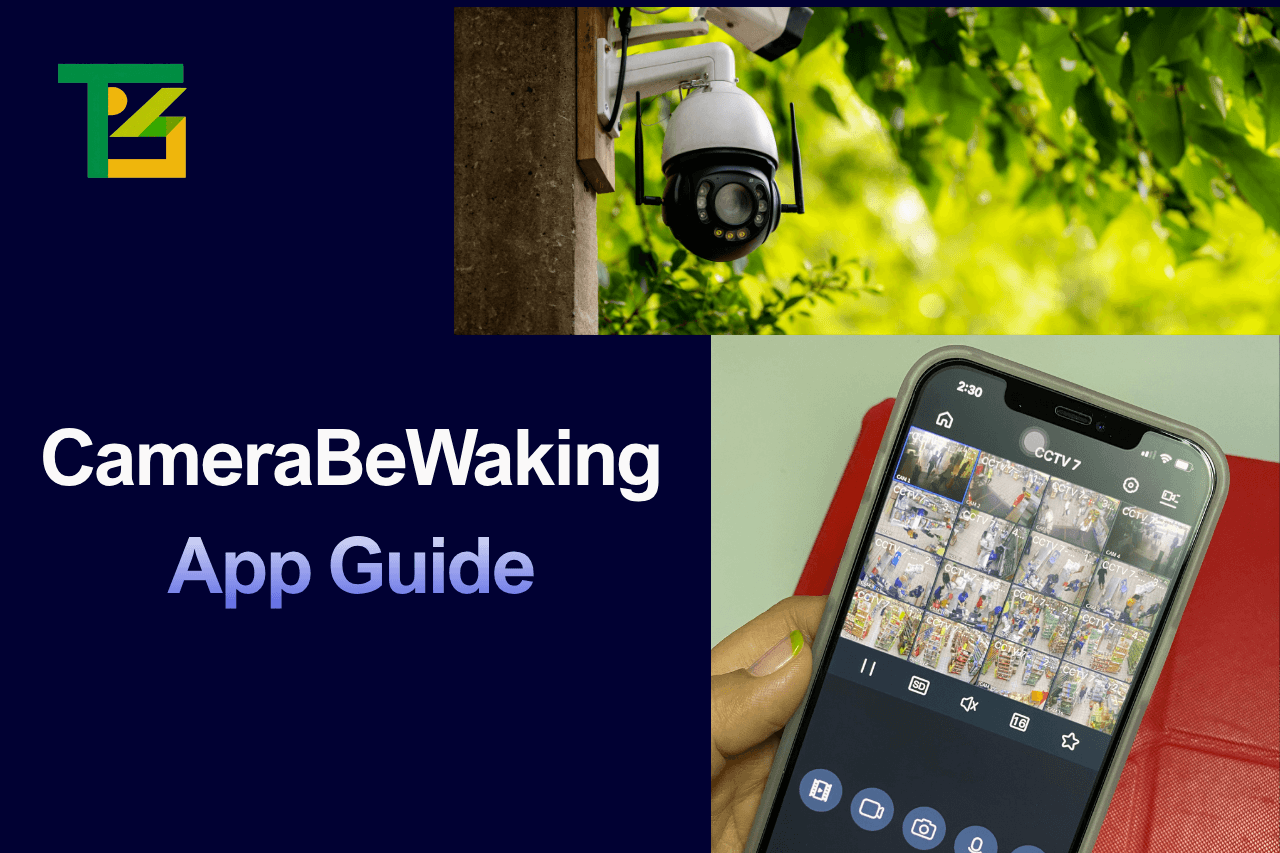
You know that old phone sitting in your drawer, the one with the cracked screen you keep meaning to sell? It’s actually worth more to you sitting on a shelf than in someone else’s pocket. That’s the whole pitch behind apps like this, and honestly, once you try it, throwing away an old device for scrap value starts to feel a little silly.
What Is the CameraBeWaking App?
Put simply, the CameraBeWaking app takes whatever phone or tablet you’ve got lying around and turns it into a live security camera — the same basic idea behind an IP camera, just running through an app instead of dedicated hardware. No new hardware, no drilling holes in your wall, no calling an installer who shows up three hours late. You download it, point the camera where you want eyes, and that’s basically it. It streams video to another device, usually your main phone, so you can peek in on your living room, your porch, or your dog destroying a couch cushion, whenever you feel like checking.
What sets it apart from just, say, leaving a video call running (which people genuinely used to do, believe it or not) is the extra stuff bolted on: motion alerts, night vision if your camera supports it, two-way audio in some versions, and cloud or local storage depending on what you pick. It’s not trying to replace a full alarm system. It’s trying to replace the $150 camera you were about to buy for a spot that honestly doesn’t need anything fancier.
What You Need to Get Started
Nothing exotic. Here’s the short list:
- An old smartphone or tablet (Android or iOS, most versions from the last five or six years work fine)
- A stable Wi-Fi connection: this matters more than people expect
- A charger and, ideally, a way to keep the device plugged in 24/7, since streaming drains battery fast
- A second phone or computer to view the footage from
- Some kind of mount or stand, even if it’s just a stack of books
That’s it. You don’t need a subscription to get basic functionality, though some tiers unlock cloud backup and longer clip storage.
How to Turn Your Smartphone Into a Security Camera With CameraBeWaking
- Download the app on the old device you’re repurposing as the camera.
- Download it again (or the companion viewer app, depending on the version) on the phone you’ll actually carry around.
- Create an account – usually just an email and password, nothing painful.
- On the “camera” device, select camera mode, grant it permissions for the camera, mic, and background running.
- Pair the two devices. Most versions do this with a QR code or a simple pairing code, which is honestly one of the smoother parts of the whole process.
- Prop the phone up wherever you want the view, plug it in, and let it run.
- Open the viewer app on your main phone, and you should see the feed pop up within a few seconds.
If the video lags or drops out, it’s almost always the Wi-Fi, not the app itself. Older routers placed far from the camera device are the usual culprit.
Where Can You Use the CameraBeWaking App?
Basically anywhere you’d put a normal camera, minus the places where you’d rather not have your old iPhone bolted to a wall permanently.
Front porches are the obvious one; package-theft paranoia is real, and this handles it well. Baby monitors are another popular use case, since a lot of people already had a spare phone doing nothing before they had a kid. Some folks use it to watch pets while at work; others rig one up in a garage or shed where a full wired system feels like overkill. A few landlords even use it (with tenant consent, please) to monitor common areas in shared buildings.
It’s less ideal for anything that needs long-term outdoor weatherproofing, since most phones aren’t built to survive rain and temperature swings the way a dedicated outdoor camera is.
Also Read: 45 Best Apps For Beginners to Help You Build New Skills in 2026
10 Alternatives to the CameraBeWaking App
If the CameraBeWaking app isn’t quite doing it for you, or you just want to compare options before committing, here’s what else is out there:
1. AlfredCamera

Probably the best-known name in this space. Cross-platform, free to start, with motion alerts and two-way audio built in. Most people land here first. It’s been around long enough to have worked out most of its kinks, and with a user base in the tens of millions, bugs tend to get reported and fixed fast. The free tier covers the basics fine; the paid version adds higher resolution, zoom, and longer cloud retention if you decide you actually need it.
2. Presence Video Security Camera

iOS-only, but solid if you’re fully in the Apple ecosystem and don’t mind sticking to one ecosystem’s app. It’s a bit more niche than Alfred, so the community and support forums are smaller, but the core streaming and motion detection hold up fine. Free storage is a nice touch given how many competitors gate that behind a paywall.
3. YI Home

Leans more toward AI-driven detection, like facial recognition, if you want something a bit smarter than basic motion tracking. It started life as the companion app for Yi’s own hardware cameras, so the interface feels a bit more “product” and less “hobby project” than some of the others on this list. It works on both Android and iOS, which is a plus if your two devices don’t match.
4. Manything

An older, well-regarded option for iPhone users specifically, good if you’ve got a spare iPhone rather than an Android. It hasn’t had the flashiest updates in recent years, but it still does the core job: live view, recording, alerts, without much fuss. Worth trying if newer apps feel over-engineered for what you actually need.
5. AirDroid

Technically a broader remote-access tool, but its security camera mode is genuinely solid and worth a look. Since it’s built around device management, you get extra perks like remote file access and screen mirroring bundled in, which none of the dedicated camera apps offer. Slightly steeper learning curve as a result, but not a dealbreaker.
6. Security Camera CZ
A paid, one-time-purchase app rather than a subscription model, which some people find refreshing after years of monthly fees everywhere. You pay once, and you’re done, no recurring charge nagging you every month. The interface is more function-over-form, so don’t expect it to look flashy, but the core features are all there.
7. Pro-Vue (Backstreet Surveillance)
Built more for people who already have some surveillance hardware and want an app that ties everything together. Less about the single-old-phone use case and more about pulling multiple feeds, phones, IP cameras, whatever you’ve got, into one dashboard. Better fit if your setup is already a bit more involved than “one spare phone on a shelf.”
8. Wyze app

Technically built around Wyze’s own cameras, but their app ecosystem is worth knowing about if you’re weighing dedicated hardware against a repurposed phone. Wyze cameras are famously cheap, so many people end up comparing “just buy a $25 Wyze cam” against “repurpose the old phone I already own.” Worth knowing both paths exist before you commit either way.
9. MoyLynk View

A newer, iPhone-specific entry with end-to-end encryption as a selling point, aimed at the privacy-conscious crowd. Being newer means a smaller track record, so I’d keep an eye on reviews before fully trusting it with anything sensitive. That said, the encryption-first pitch is exactly what a chunk of users are actively looking for these days.
10. Reolink App

Again, more hardware-tied, but useful to know if you eventually decide to mix a couple of dedicated cameras in with your repurposed-phone setup. Reolink’s own cameras are reasonably priced for what they offer, so a hybrid setup — one or two real Reolink units outside, an old phone covering something indoors isn’t a bad way to split your budget.
Your mileage will vary depending on what you actually need. Most people don’t need option ten.
Tips for Better Smartphone Security Camera Setup
A few things I’ve picked up, or that just seem like common sense once you’ve messed with this stuff for a while:
- Keep the phone plugged in permanently. A dying battery mid-stream defeats the whole point.
- Clean the lens. Sounds dumb, but an old phone that’s been in a junk drawer for two years has fingerprints and dust all over the camera.
- Position it at an angle where light doesn’t blow out the image. Direct sun through a window will wash out your footage completely.
- Test the motion alerts before you trust them. Some apps are overly sensitive and will ping you every time a moth flies by.
- Lock down the phone itself with a passcode, just in case someone actually walks off with it.
- If you’re monitoring outdoors, get a cheap waterproof case or housing; the phone wasn’t built for weather and won’t last otherwise.
CameraBeWaking App vs. Traditional Security Cameras
This is where people get a little too binary, in my opinion. It’s not really an either/or thing.
Traditional cameras win on durability, weatherproofing, and often on video quality if you’re buying something mid-range or better. They’re built for the job, full stop. But they cost money upfront, sometimes need professional installation, and if you want more than one or two, the price adds up fast.
Repurposing old phones costs basically nothing if you already have the hardware. The tradeoff is you’re relying on devices that weren’t designed for constant use, so battery degradation and heat over long stretches are real concerns. It’s a great stopgap or budget solution, less so a permanent replacement for a proper outdoor system protecting your entire house.
Honestly, a lot of people end up doing both: a couple of dedicated outdoor cameras for the perimeter, and a spare phone running an app like this for an indoor spot they don’t want to spend more money on.
Also Read: Top 10 Mobile App Development Companies
Final Thoughts
There’s something satisfying about giving an old phone a second life instead of letting it rot in a drawer or shipping it off to some recycling pile you’ll never think about again. It’s not a perfect replacement for a proper security system, and nobody’s claiming it is, but for a lot of everyday situations- keeping an eye on a pet, checking who’s at the door, watching a baby nap- it does exactly what you need without another trip to the store.
FAQs
Does the CameraBeWaking app work without internet?
No, it needs Wi-Fi to stream footage. Some versions support local recording without internet, but live viewing requires a connection.
Will using an old phone as a camera ruin the battery faster?
Yes, constant charging does wear batteries down over time. It’s a tradeoff worth accepting for a repurposed device, less so for a phone you still plan to use daily.
Can I use more than one phone at once?
It depends on the version you’re running – some support multiple camera feeds under one account; others are strictly one-to-one.
Is footage stored securely?
Varies by provider and plan. If privacy is a big concern, look specifically for a local-storage option rather than defaulting to the cloud.
Do I need a subscription?
Basic features are usually free. Extras like extended cloud storage or multi-device support often sit behind a paid tier.





One Response