
Quick Answer
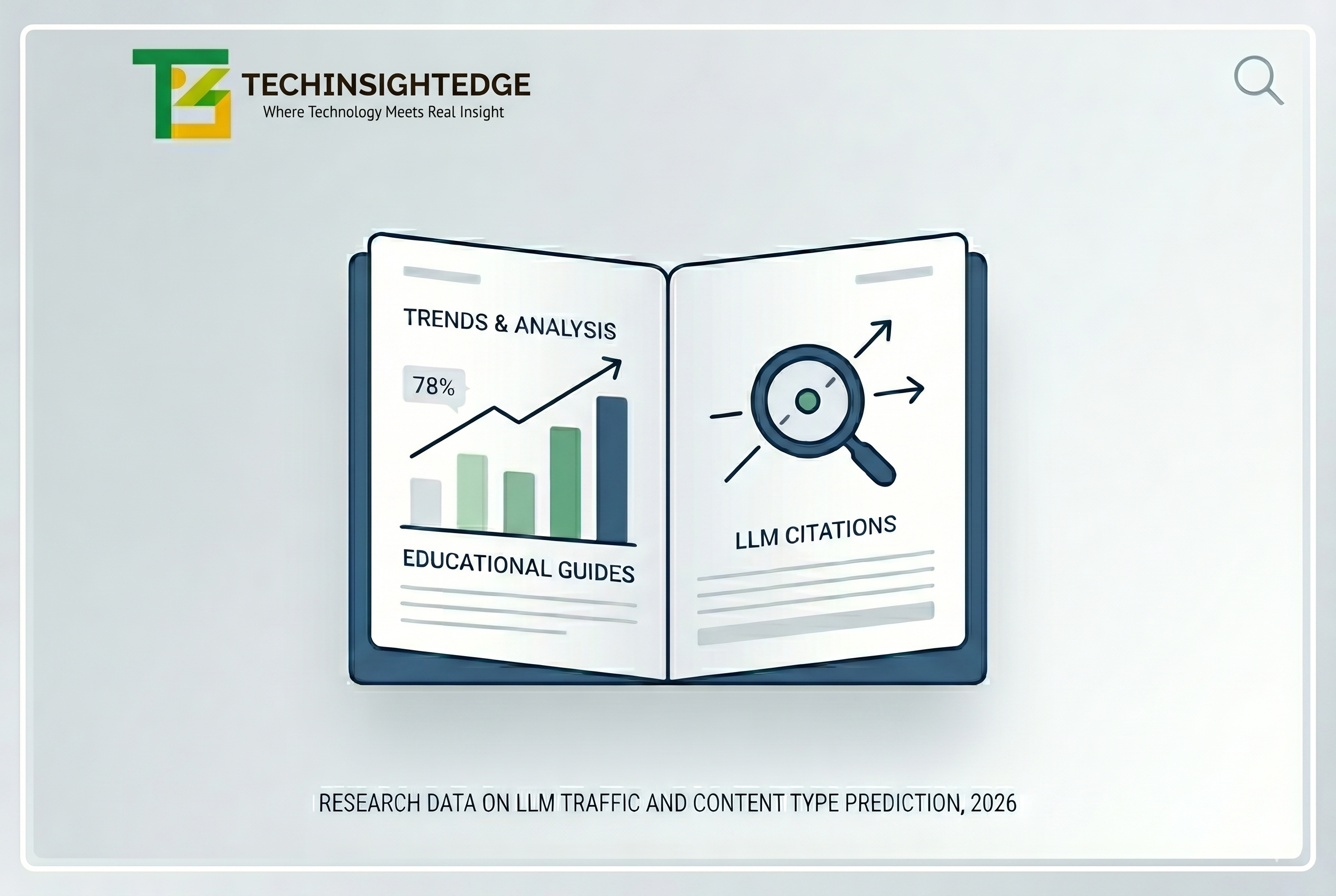
AI search traffic (from ChatGPT, Perplexity, Claude, and Copilot) favors original data, proprietary research, and named interactive tools — not the comprehensive how-to guides that traditional SEO rewards. New analysis across 10 websites and 150,000 pages found that trend and data-driven posts received LLM citations 78% of the time, while educational guides sat at just 12%. Your top organic pages and your top LLM-performing pages are, in most cases, not the same pages.
There’s a version of this post that opens with “GEO is the new SEO.” You’ve probably already seen that version — or twenty variations of it. This isn’t that post. What follows is messier and more useful: actual data on how LLM referral traffic behaves versus organic, and what it means for anyone trying to keep both channels alive.
The debate in most SEO circles has been running on assumption for a while now. Some people insist strong organic performance naturally carries over into AI visibility. Others have declared SEO obsolete and pivoted entirely to generative engine optimization (GEO). Both camps are probably wrong, at least partly.
A recent cross-site study looked at GA4 data covering 10 websites and roughly 150,000 indexed pages over a single month in early 2026. The findings don’t support either extreme — but they do show something worth paying close attention to.
Three Findings That Reframe the Whole Conversation
1. Content type predicts LLM traffic better than almost any other variable
This was the sharpest result in the dataset. Blog theme — what a post is actually about and how it’s structured — turned out to be a stronger predictor of LLM citations than domain authority, word count, or backlink count.
Posts built around unique data and trend analysis were cited by LLMs 78% of the time. Year-in-review content grounded in numbers came in at 61%. Meanwhile, the comprehensive educational how-to post — the SEO staple — sat at a measly 12%.
- 78% LLM citation rate for trend & analysis posts
- 61% Data-based year-in-review posts
- 12% Standard educational how-to guides
The reason isn’t hard to work out. LLMs are already capable of writing a “beginner’s guide to X.” They don’t need to cite you for that. But they can’t reproduce a dataset you collected, a survey you ran, or a finding that only exists because your team dug it up. That’s where citation value actually lives.
“If an LLM can write it from memory, it probably won’t cite you for it. Original data is the thing LLMs can’t fake — and that’s exactly why they link to it.”
2. Your best organic pages aren’t your best LLM pages
This one tends to surprise people. The top 10 organic pages in the study captured 55% of organic sessions — a totally normal concentration for most sites. Those same pages? Only 29% of LLM sessions.
More striking: among the top 100 organic performers, 49 pages had zero LLM traffic whatsoever. Not low. Zero.
What this means practically: If you’ve been assuming your SEO wins are protecting you in AI search, the data says otherwise. LLM traffic is correlated with organic success, but it’s not a derivative of it. They’re separate signals, evaluated by separate systems.
This is one of the core implications for any content strategy aimed at both channels. You cannot optimize one and expect the other to follow automatically.
3. Service and product pages outperform on a per-session basis
Articles still win on raw LLM session counts, but that’s mostly because there are so many of them. When you measure LLM sessions per 1,000 organic sessions — a fairer efficiency ratio — the picture looks different.
| Page Type | LLM Sessions per 1,000 Organic |
|---|---|
| Service / Product | 29.4 |
| Article / Content | 23.4 |
| FAQ / Support | 14.0 |
| Tool / Demo | 9.8 |
| Homepage | 5.6 |
Service and product pages leading this list feels counterintuitive. But when someone asks an AI “what tool should I use for X” or “which company handles Y,” the AI is much more likely to point to a specific product page than to a related blog post — especially if that page is well-structured and clearly describes what the product does.
How LLM Users Actually Behave Once They Arrive
Here’s a peculiar detail from the engagement data. Average session time was nearly identical across channels: 46.9 seconds for organic visitors, 47.1 for LLM-referred visitors. Basically the same. But that average is doing a lot of work to hide a very uneven distribution.
On 71% of pages that received LLM traffic, AI-referred users spent less time than organic visitors. On 27% of pages, they spent dramatically more — sometimes three to ten times longer.
| Page Type | Organic Avg. | LLM Avg. |
|---|---|---|
| Tool / Demo | 101 sec | 146 sec |
| Homepage | 36 sec | 82 sec |
| Service / Product | 69 sec | 63 sec |
| Article / Content | 56 sec | 40 sec |
The pattern makes sense when you think about user intent. Someone arriving at an article from an LLM likely came to verify a specific fact, grab a number, confirm something the AI said. They find it (or don’t), and they leave. But someone who lands on a tool or a product page from an AI recommendation? They’re there to actually use something. That’s a much higher-intent visit — and the engagement numbers reflect it.
The “LLM-only” traffic category is real and worth tracking
One finding that’s easy to overlook: 14% of all LLM-receiving pages in the dataset had zero organic clicks during the same period. No clicks from Google at all. Only LLM referrals.
There’s a temptation to read this as some kind of AI discovery magic. More likely, these pages simply rank poorly in traditional search, or they’re getting their click-through crushed by AI Overviews appearing in the SERP. Either way, the practical implication is the same — AI Overviews consistently underperform blue links on CTR, even compared to lower-ranked results, which means pages cited in AI answers don’t always get the organic click even if they rank.
What the data did show about these LLM-only pages: engagement quality was among the highest recorded. Visitors sent by an AI with a specific recommendation arrive with context and intent. Don’t dismiss low-organic / high-LLM pages as anomalies.
What to Actually Do About the GEO–SEO Gap
Lead with data, not explanations
The bluntest way to say this: stop trying to rank for topics LLMs already understand. Generic educational content — “what is X,” “how does Y work,” “beginner’s guide to Z” — is the LLM’s home turf. It doesn’t need to quote you on that. What it genuinely can’t produce itself is a dataset you gathered, a statistic from your user base, or a pattern you noticed that nobody has named yet.
If you have any kind of proprietary data — usage patterns, customer survey results, internal benchmarks, even aggregated support ticket themes — turn it into a structured post. That’s the raw material LLMs are hungry for. Also worth knowing: this aligns well with Google’s E-E-A-T framework, which rewards original experience and first-hand expertise.
Put an answer capsule at the top of every page you want cited
An answer capsule is just what it sounds like: a short, standalone, direct answer to the core question of the page, placed near the top, written in plain prose, free of navigation links. It gives an LLM a clean unit to quote without needing to parse the entire article.
Previous research across 15 domains found this structural pattern to be the single strongest predictor of ChatGPT citations. LLMs are pattern-matching for the easiest extractable answer. If your page buries the key insight in paragraph nine, you’re making the model work harder for no reason.
- Place it in the first third of the page, before the main body develops
- Write it as a complete, self-contained answer — not a teaser or a hook
- Keep it under 120 words; crisp and citable
- Avoid internal links inside the capsule — they fragment the text for LLM parsing
Build or properly surface any interactive tools you have
This was the quieter surprise in the data. Interactive tools showed the highest per-page LLM citation rates of any content category. Nearly all of them were receiving LLM sessions. And users who arrived via LLM stayed significantly longer on tools than organic visitors did.
LLMs actively recommend specific tools by name when users ask for help with assessments, calculations, screeners, or evaluations. If your site has a calculator, quiz, configurator, or any kind of named diagnostic, it’s probably one of your most valuable GEO assets — and it may be underpromoted.
Make sure it has a clear, searchable name grounded in keyword research. Make sure it answers a specific question when someone arrives cold. And make sure it’s being indexed properly — it’s easy for JavaScript-heavy tools to get partially crawled or skipped.
Track your LLM traffic and organic traffic in separate views
In GA4, you can isolate LLM referral sessions using channel groupings and referrer path segmentation. Sessions from ChatGPT, Perplexity, Claude, and Copilot all show up at the session level when users click through. (Note: LLM crawls — GPTBot, ClaudeBot — are server-level events that don’t appear in GA4. What GA4 shows is actual human referral clicks.)
Once you have both views separated, the key question to ask is: which pages appear in one dataset but not the other? Pages with strong organic traffic and zero LLM sessions are probably candidates for restructuring — adding original data, tightening the answer structure. Pages with LLM sessions but no organic clicks deserve a second look at their technical SEO and their SERP presence.
One practical starting point: Pull your top 50 organic pages. Check how many have any LLM traffic at all. If fewer than half do, you have a clear mandate — your content is performing well for Google but it’s not the kind of content LLMs want to quote. That’s the gap worth closing first.
The Bigger Picture: Two Systems, Two Scorecards
Nothing in this data says SEO is dying. Traditional organic search still drives the bulk of sessions for most websites, and the fundamentals — strong Core Web Vitals, consistent content production, authoritative backlinks — remain relevant. But what the data does say clearly is that optimizing for one no longer guarantees performance in the other.
Google’s ranking algorithm and an LLM’s citation logic are evaluating your pages by different criteria. Google wants well-structured content that satisfies a query. LLMs want extractable, verifiable, distinctive information they couldn’t produce themselves. Those objectives overlap — but they don’t overlap enough to treat them as the same job.
The sites in this dataset that performed well across both channels had something in common: they answered precise questions with original information and kept their pages genuinely useful as destinations, not just click-catchers. That’s always been good practice. The newer reality is just that two different systems are now grading your homework — and you’ll need to understand both rubrics to do well on both tests. For more visit our website techinsightedge for latest updates.